

How to Build the Perfect Bridal Beauty Inspiration Board
Your bridal makeup inspiration board should make your vision feel clearer — not leave you even more confused. The key isn’t saving more photos, but learning how to spot the details, patterns and overall feeling that truly reflect the bridal look you’re drawn to.
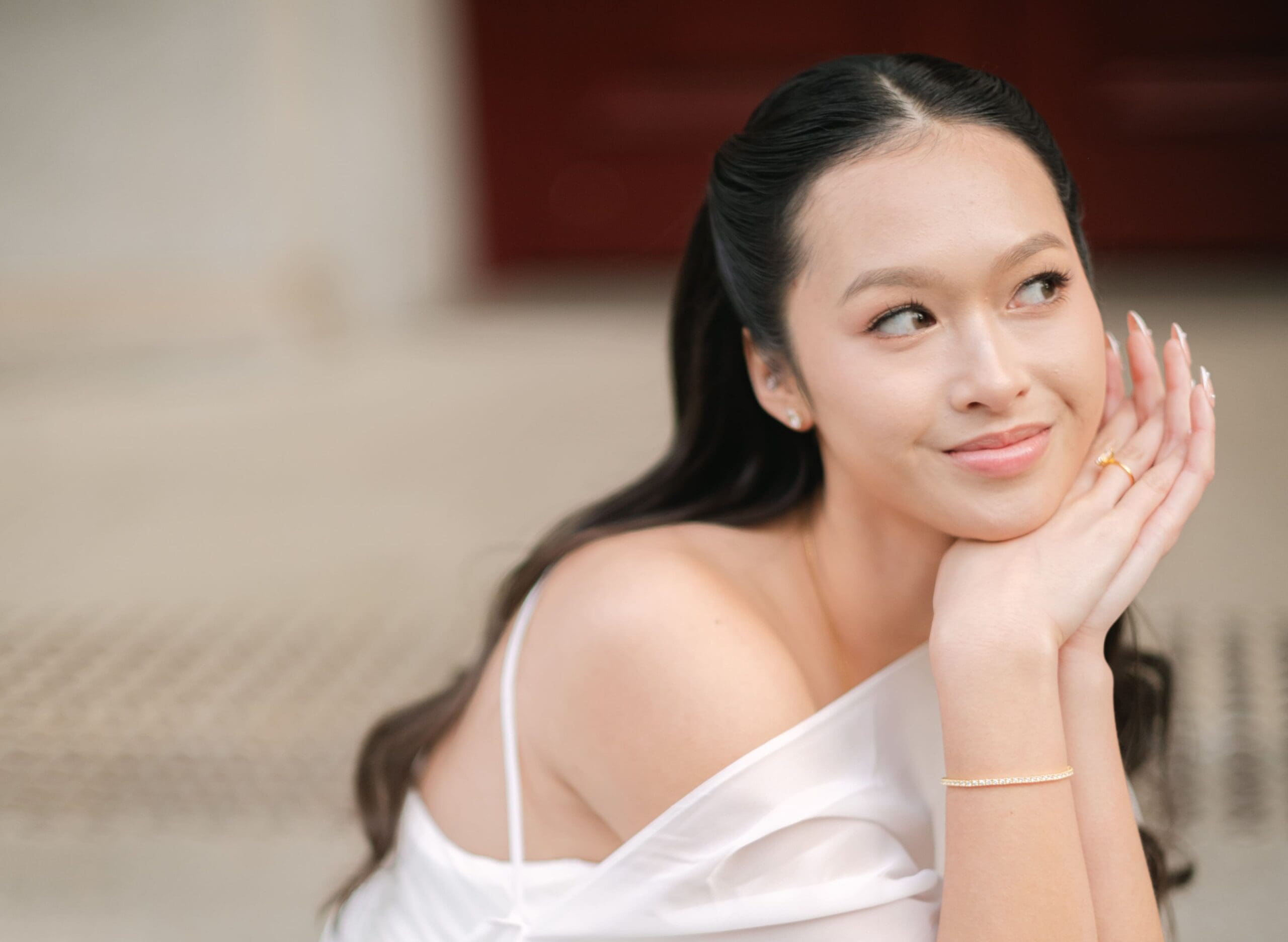
Photography by: JD & Co Photography
WHEN YOUR PINTEREST BOARD HAS BECOME A LITTLE CHAOTIC
Let’s be honest: saving wedding inspiration is one of the fun parts of planning.
You start with one soft-glam look, then find a beautiful bun, a set of Hollywood waves and three completely different lip colours. Before you know it, your Pinterest board has hundreds of images and no obvious direction.
That doesn’t mean you’ve saved too many photos. The bigger issue is usually that you’ve saved too many different photos.
Your bridal beauty inspiration board should help you understand what you love, not leave you feeling as though you have to choose between every beautiful image online. At Aligned by Thi, I use it as the starting point for a thoughtful conversation about you.
A useful board brings your preferences into focus. It helps you see the patterns in your bridal makeup inspiration and bridal hair inspiration, then gives me a clearer starting point for the conversation.
The aim isn’t to create instructions for copying another bride. It’s to communicate the feeling you want and let that feeling become something personal to you.
WHAT SHOULD AN INSPIRATION BOARD ACTUALLY DO?
Think of your inspiration board as a shared visual language between you and your artist.
It can show that you prefer luminous skin to a matte finish, relaxed texture to a sleek shape or softly defined eyes to something more dramatic. Those differences are much easier to show in a photo than explain from memory.
A good board also helps you notice your own patterns. You may think you’ve saved completely different looks, then realise nearly every image has fresh skin, a soft neutral eye and an elegant low hairstyle.
What the board shouldn’t be is a rigid checklist. It can’t guarantee that one exact photograph will translate to your features, hair and wedding. It also doesn’t replace a consultation.
Its job is much simpler: help you and me begin with greater clarity.
IN A NUTSHELL
- Save the images that naturally catch your attention
- Identify exactly what you love about each one
- Look for repeated details and an overall pattern
- Choose makeup references that feel relevant to you
- Consider your own hair length, texture and density
- Bring your dress, veil and accessories into the picture
- Pay attention to lighting, editing and different angles
- Curate your final board into a clear, focused collection
STEP 1: SAVE WHAT CATCHES YOUR EYE
At the beginning, give yourself permission to explore.
Save the images that make you pause. Maybe it’s the skin, the hairstyle or the way the whole look works with the dress. You don’t need to explain every choice yet.
Try collecting a mixture of close-ups and wider photographs. Close-ups help you see makeup detail, while wider images show how the hair, veil, dress and overall styling work together. Different angles are useful for hairstyles, and different lighting gives you a better sense of the makeup.
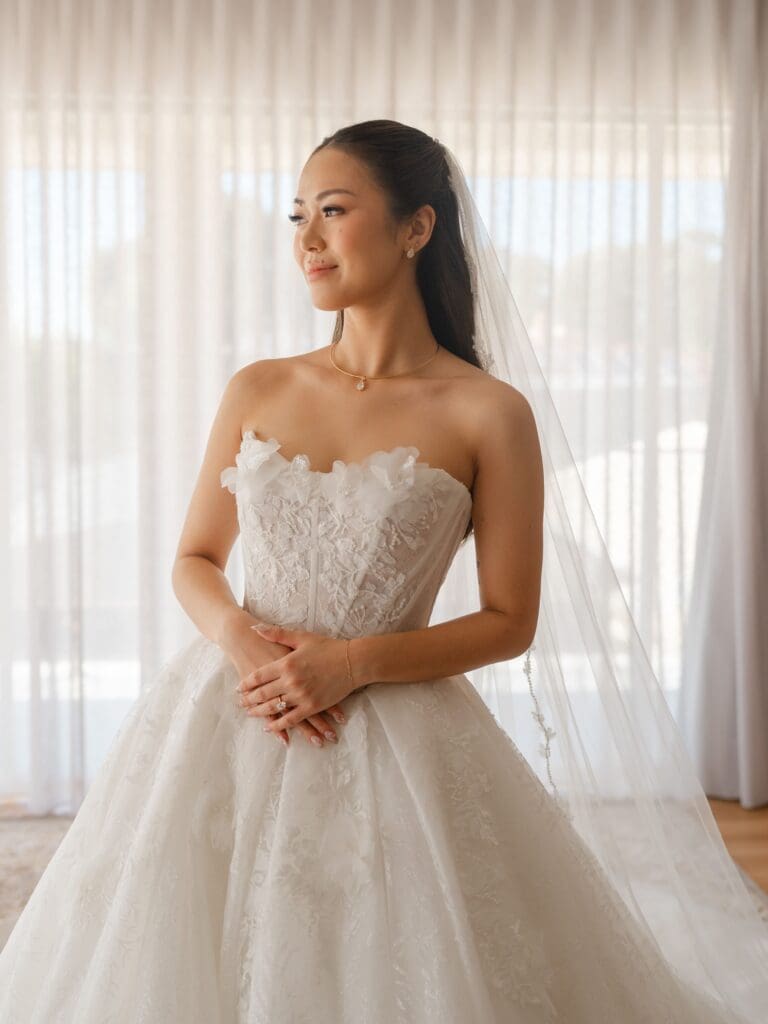
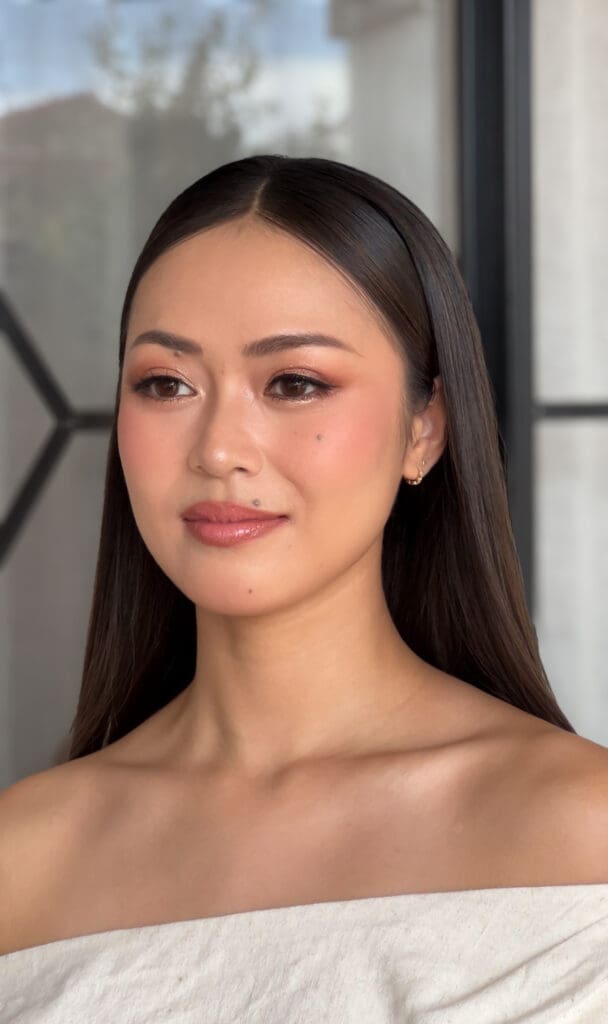
Photo Courtesy: Meadow Lane Visuals
This early collection is allowed to be broad. You’re gathering ideas, not making the final decision.
The important part comes next, when you stop looking at each image as a complete answer and start asking why it appeals to you.
STEP 2: ASK YOURSELF WHAT YOU LOVE ABOUT IT
“It’s beautiful” is a perfectly understandable reaction. It just doesn’t tell your artist very much.
Look at the photo again and ask what’s actually drawing you in.
Is it the glowing skin? The soft eyes? The lashes? The lip colour? The effortless shape of the hairstyle? Is it the elegance or simplicity? Or is it the confidence the bride seems to have?
Sometimes the thing you love isn’t the hair or makeup at all. It might be the lighting, the dress, the flowers or the mood of the photograph.
Try adding a short note to your favourite images. “I love the skin finish,” “This feels polished but still soft,” or “I like the movement around my face” gives me useful information I can work with.
This is one of the most important parts of building the board. Inspiration isn’t about collecting the most beautiful photos. It’s about collecting the ones that best represent how you want to feel.
STEP 3: LOOK FOR THE PATTERN
Now view the images together.
What keeps appearing? Maybe the skin always looks luminous. Maybe the eyes have soft definition rather than sharp liner. Perhaps every hairstyle sits low, has movement and leaves a few pieces around the face.
Think about the overall mood too. Does the collection feel romantic, minimal, modern, polished or glamorous?
Then look at the images that don’t fit. If most of the board is soft and effortless but one image features a highly structured updo and dramatic makeup, ask whether it represents a real second direction or whether you simply admired that one photo.
Your board doesn’t need to become completely uniform. A little variation helps you compare options. You’re simply trying to understand where your preferences are clear and where you’d like my guidance.
Once the pattern appears, the whole process starts to feel much less overwhelming.
STEP 4: CHOOSE MAKEUP PHOTOS THAT ARE RELEVANT TO YOU
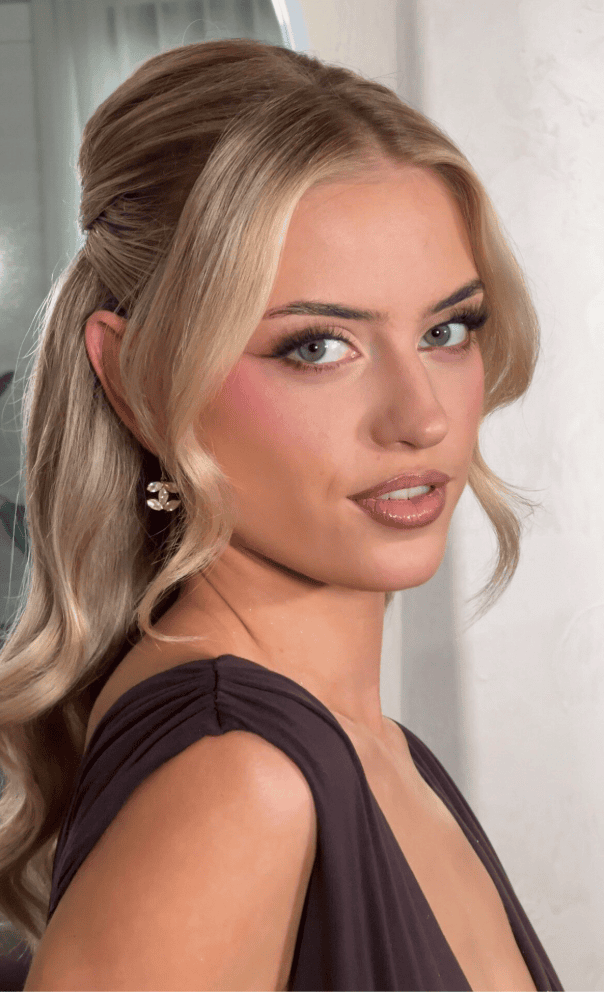
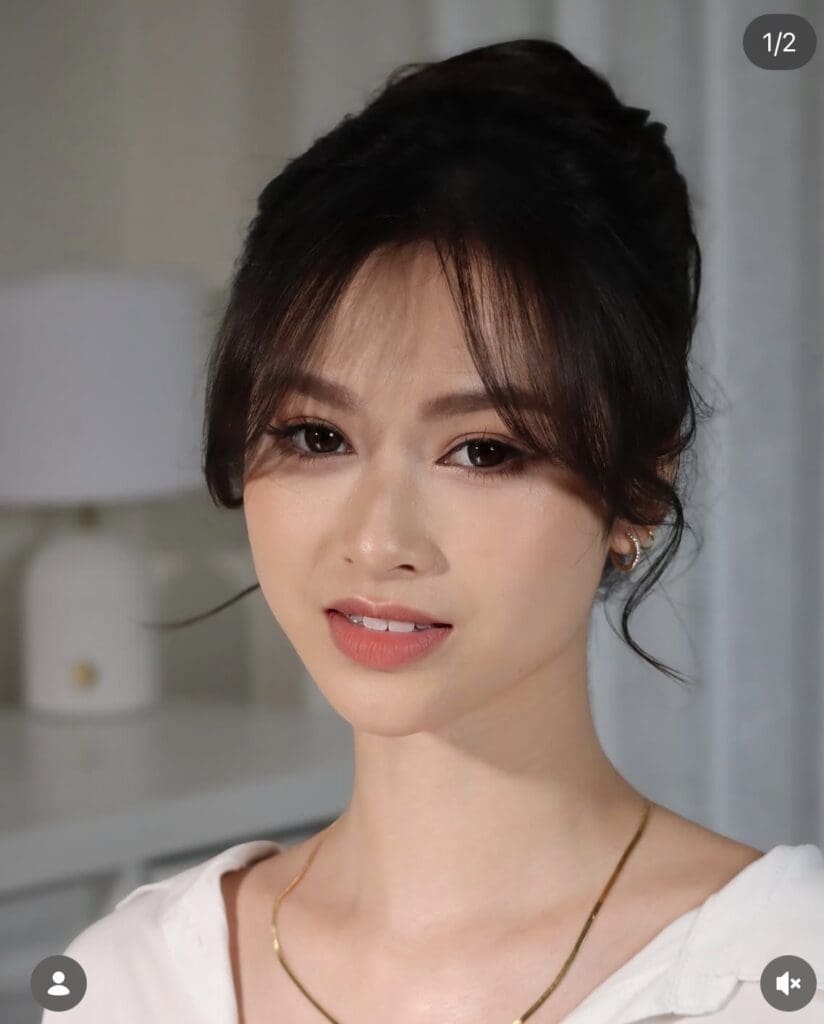
The most useful bridal makeup inspiration isn’t always the most flawless image. It’s the image that gives you realistic and relevant information.
Where possible, look for people with a similar face shape, eye shape, skin tone or natural colouring. If you have a particular skin type or usually wear very little makeup, include photos that feel closer to the finish you’d be comfortable wearing.
Nobody on the board needs to look exactly like you. I can adapt professional techniques, and inspiration can come from any face. Similarities simply make it easier to discuss how the look may translate.
Be careful with labels too. A photo described as “natural makeup” might include perfected skin, contour, false lashes and carefully blended eye makeup. What you’re seeing may actually be soft glam bridal makeup.
Instead of relying on the caption, look at the result. How much definition do you like? How finished does the skin appear? Are the lashes soft or noticeable?
That’s the information your artist needs.
STEP 5: BE REALISTIC ABOUT THE HAIR, WITHOUT LIMITING YOURSELF
Hair inspiration becomes much more helpful when you consider your own length, density, texture, layers and colour.
If you have shoulder-length hair and save a photo of very long, full waves, extensions may be needed to create a similar effect. If your hair is fine, the artist may need to use preparation or support that you can’t see in the finished image.
Hair colour changes how detail photographs too. Braids and texture can look especially defined on highlighted hair because of the contrast. The same style may appear softer on one dark colour, even when the technique is identical.
Try to save more than the back view. Front and side angles help show the parting, face-framing pieces and volume around the crown.
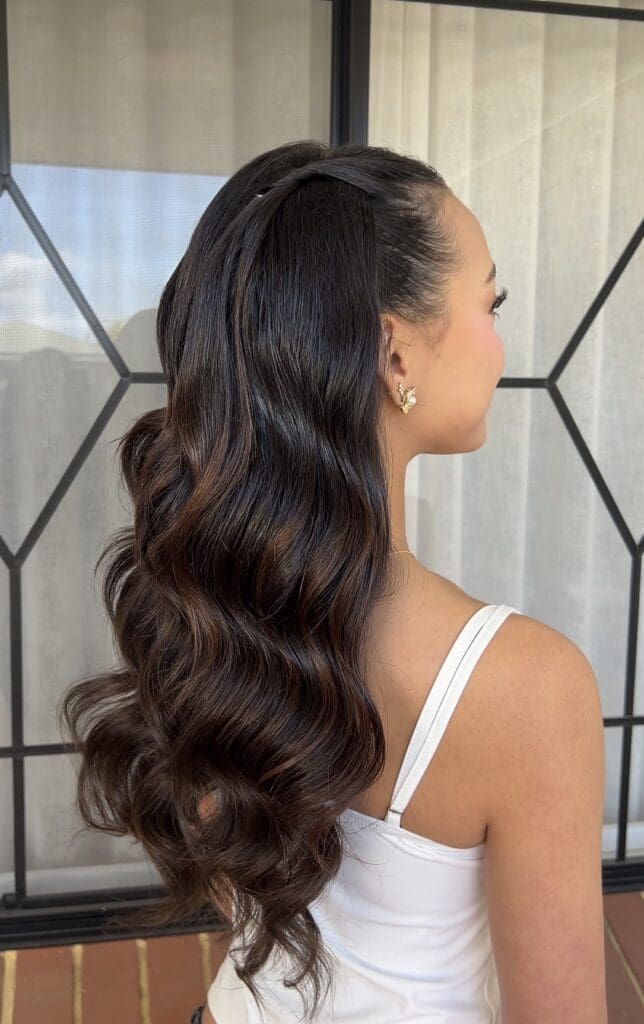
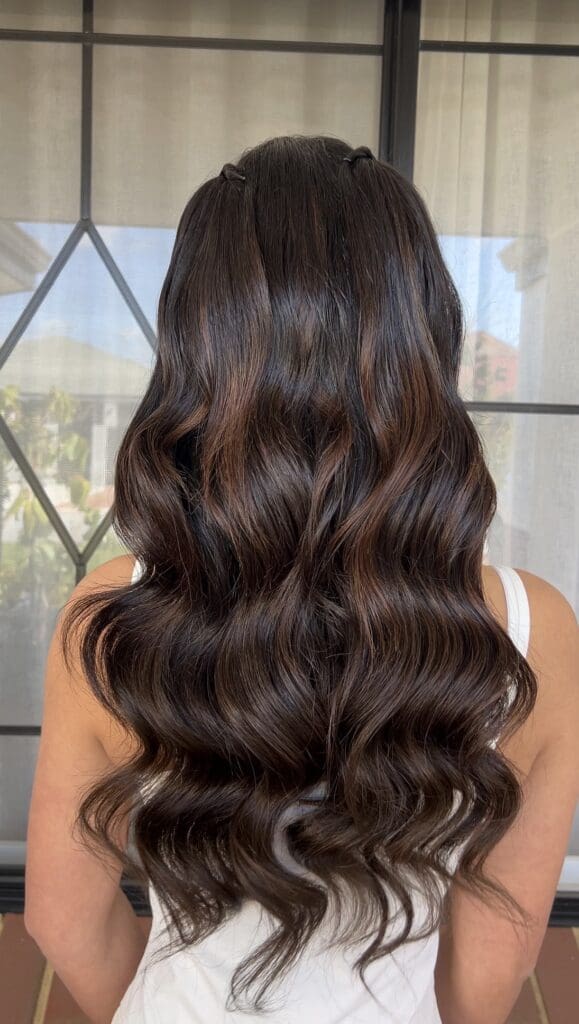
This isn’t about telling yourself a look is impossible. It’s about giving me enough information to explain the best path towards it, whether that means an adaptation, extensions or a slightly different version that works beautifully with your hair.
STEP 6: BRING THE REST OF THE WEDDING INTO THE PICTURE
Your hair and makeup should make sense with the choices you’ve already made for the wedding.
Think about the dress neckline, back details, veil, jewellery and hair accessories. If the back of your dress is a feature, you may want a hairstyle that keeps it visible. If you’re wearing a veil, it needs a secure and comfortable place to sit.
The location and overall mood matter too. A relaxed outdoor celebration and a formal evening reception create different contexts, even if either could work with several beauty directions.
Add a few complete bridal images to the board. Seeing the hair, makeup, dress and accessories together can help you communicate the balance you’re drawn to.
There’s no rule that says a certain dress must have a certain hairstyle. These details simply give me more context so the final recommendation feels connected to the whole day.
STEP 7: DON’T FORGET ABOUT LIGHTING AND EDITING
Have you ever loved a makeup look in one photo, then noticed it looked completely different in a video? Lighting and editing can make a big difference.
Studio lighting can soften skin texture and make makeup appear lighter or more seamless. Bright natural light shows colour and texture differently. Flash photography changes the way definition appears.
Editing may also adjust skin, colour and contrast, while a carefully selected angle can hide details you’d see in person.
That doesn’t mean you should distrust professional photographs. Just try to include a mix. Look for indoor and outdoor images, close-ups and wider views. Videos can be helpful too because they show movement and changing angles.
The more context you have, the easier it is to set realistic expectations and explain what you actually like about the look.
STEP 8: CURATE THE FINAL COLLECTION
Once you can see a clear direction, start removing the images that no longer fit.
You may want to sort your hair and makeup images into separate sections, then choose a smaller collection to bring to the consultation. A few complementary photos are usually more useful than one “perfect” image or a board with fifty competing ideas.
Keep your short notes. They’ll help you remember whether you saved an image for the skin, the eyes, the hair or the overall feeling.
You can include an example of something you don’t want if it clarifies an important boundary. Just make sure the board is mostly focused on the direction you do want.
You also don’t need to arrive with every decision made. Some brides know exactly what they like. Others know only that they want to feel polished, soft or confident. Both are completely valid.
The board is there to help you communicate, not to test how well you’ve planned your beauty look.
HOW I USE YOUR INSPIRATION DURING THE BRIDAL PREVIEW
When you bring your collection to me, I’ll look for the details connecting the images.
I may ask what you love about the skin, eyes, hairstyle or overall feeling. More importantly, I’ll ask why those details appeal to you.
Then I’ll consider your features, hair, dress, accessories, personality and comfort level. Some ideas may translate easily. Others may need an adjustment to create the same feeling in a way that works better for you.
At Aligned by Thi, I see inspiration as a guide, not a set of instructions.
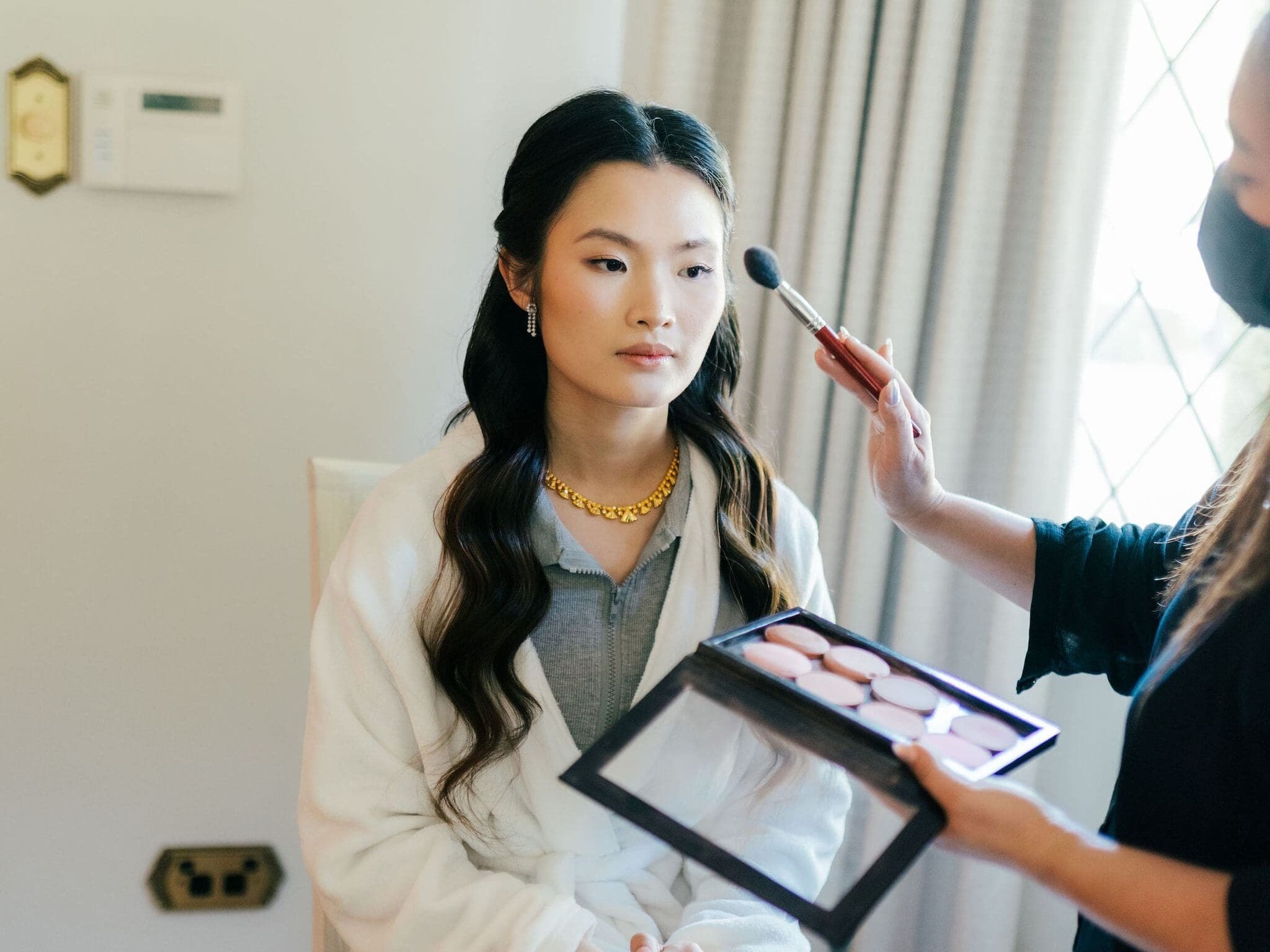
The bridal preview is collaborative too. I give you a mirror throughout the appointment so you can see the look developing and share your thoughts as you go. If something needs more softness, definition or balance, we can refine it together.
Your bridal appointment shouldn’t feel rushed. I allow generous time so that whether you arrive with a clear vision or need help finding one, you can leave feeling confident in the choices we’ve made together.
Photography by: Kenneth Lim
READ: Why Every Bridal Hair and Makeup Look Should Be Personalised
A QUICK INSPIRATION-BOARD CHECK
Before the consultation, ask yourself a few final questions.
Can you describe the overall feeling of the board? Do the makeup photos share common details? Do the hairstyles have a similar shape or mood? Have you included references that relate to your features and hair? Have you thought about the dress, veil, accessories and venue? Do you know what you love about your strongest images? Is there anything you’d especially like my advice on?
You don’t need a perfect answer to every question. If the board helps you and me have a clearer conversation, it has done its job.
READ: 10 Questions to Ask Before Booking Your Bridal Hair and Makeup Artist
LET THE INSPIRATION BECOME SOMETHING OF YOUR OWN
Your board isn’t there to recreate another person’s wedding photographs.
It’s there to help you understand the look and feeling you want for your own day. From there, I can take those ideas and shape them around you.
The most timeless bridal look isn’t simply the one that follows a trend beautifully. It’s the one that still feels like you every time you look back at the photographs.


Be the first to comment